Post amended May, 31st 2025 : I extended the description to all 56xx-7000 models.
In 1968, Seiko introduced its first automatic King range, based on the 56xx 28,800 bph movement.
In the JDM Seiko catalog n°2 from 1968 the only available 56KS model was the ref. 7000 case associated with the ref. 7000 dial, with the movements 5625 (ref. 56KAC 010 700-700, date only) or 5626 (ref 56KAW 010 700-700, day & date). Both models were available with a gold plated case as well.
In 1969, Seiko introduced a second 56KAC/KAW model, the “030” with the ref. 7020 dial. These two new models had the references 56KAC 030 700-702 and 56KAW 700-702. Both were available with a gold plated case.
This very first automatic King Seiko 56xx-7000 is, according to me, THE 56KS to have if there would be only one to choose.
Presentation
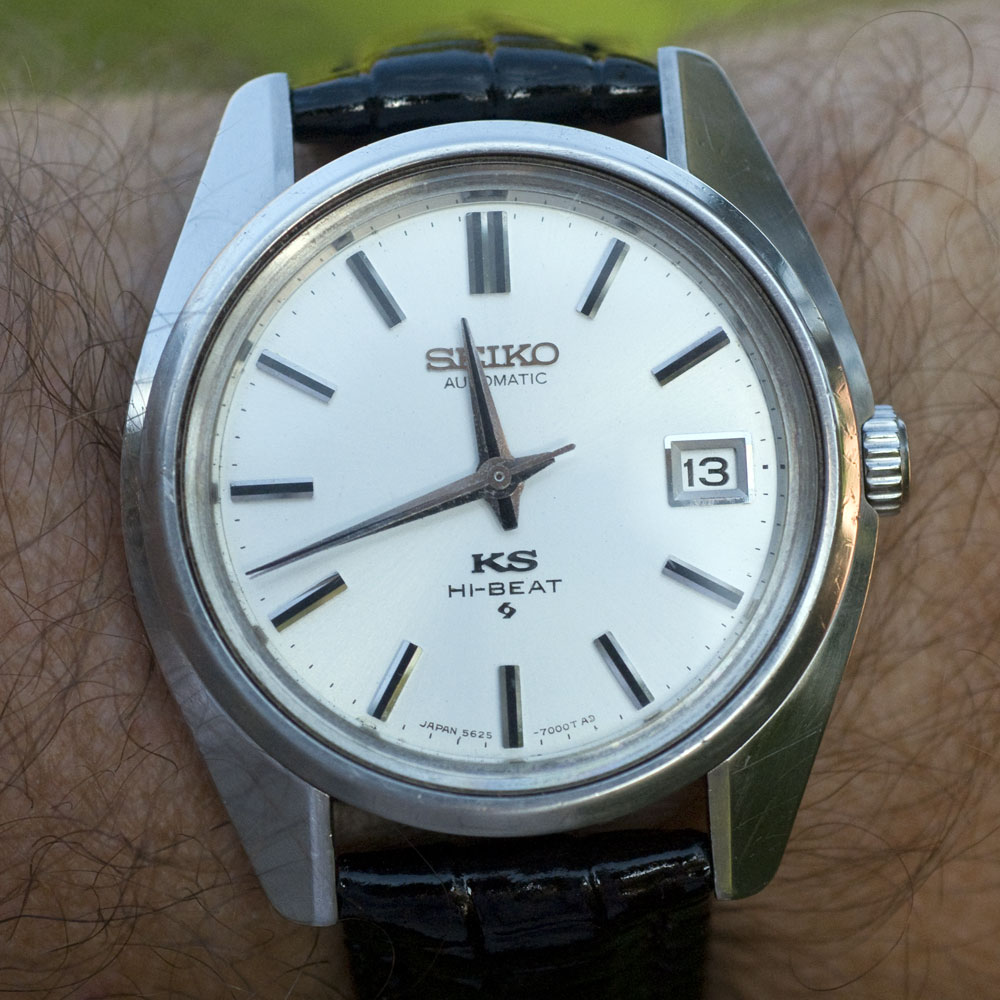
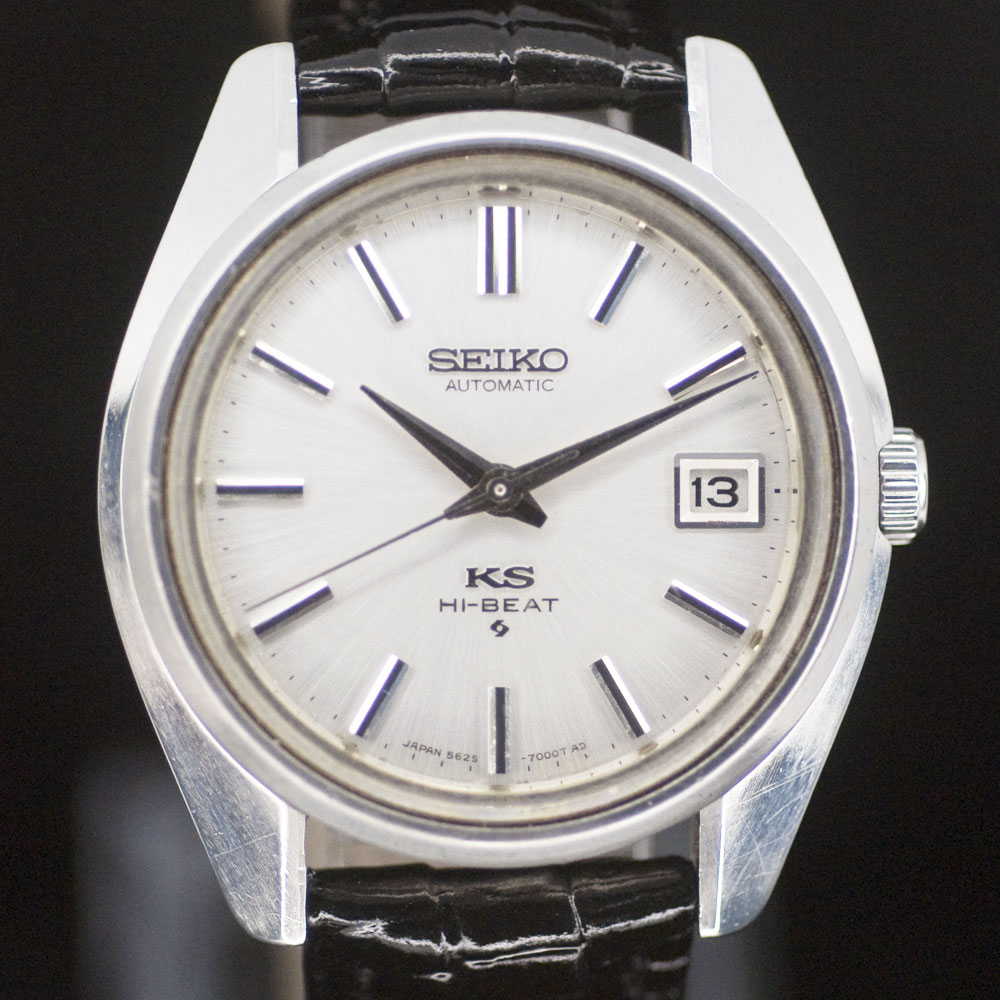
The design of this KS56 7000 is something particular, we immediately notice these thick lugs and the strong vertical symmetry of the case. The case is 37 mm width, which was the average size of a Seiko in 1969. The watch was sold with a black leather band and a KS-signed steel buckle.

The dial & hands
The 7000 dial is simple and clear. The day (and date) window is at 3 o’clock. The Seiko logo is located under the 12 o’clock marker and is underlined by the “Automatic” mention. On the lower half of the dial, we have the applied KS symbol, the word Hi-Beat and the Suwa logo. As usual, at the very bottom to the movement reference (5625 or 5626) and the dial reference (7000T AD).
The hour markers are made of thin metal batons, the 12 o’clock one is doubled.
The hour and minute hands are of dauphine type, the second hand is a simple thin one.
The 7020 dial seems to be an attempt to propose something more modern, with “U”-shaped hour markers and is associated to more trendy broad baton hands.
The case
The all stainless steel 7000 case is made of one single piece as most of the early KS and LM models. The case back has the traditional golden KS medallion. The crown is quite big for an automatic watch but it allows an easy hand winding. It is traditionally positioned at 3 o’clock and the KS letters engraved on it.
On the back we can find the elements found on most of the Seiko with a monobloc case. The serial number of the watch is engraved at the bottom of the back. Later variations of the case have been proposed, based on the same design : 7110, 7111.
The flat glass crystal is glued on a bezel which is held by the pressed outer ring.
We can notice a screw between the lower lugs, it can be unscrewed to access another screw which will trigger the regulator of the balance. The movement can be finetuned this way without taking it out of the case.
The 7000 case was available in gold plated.
[smartslider3 slider=”20″]

The movement
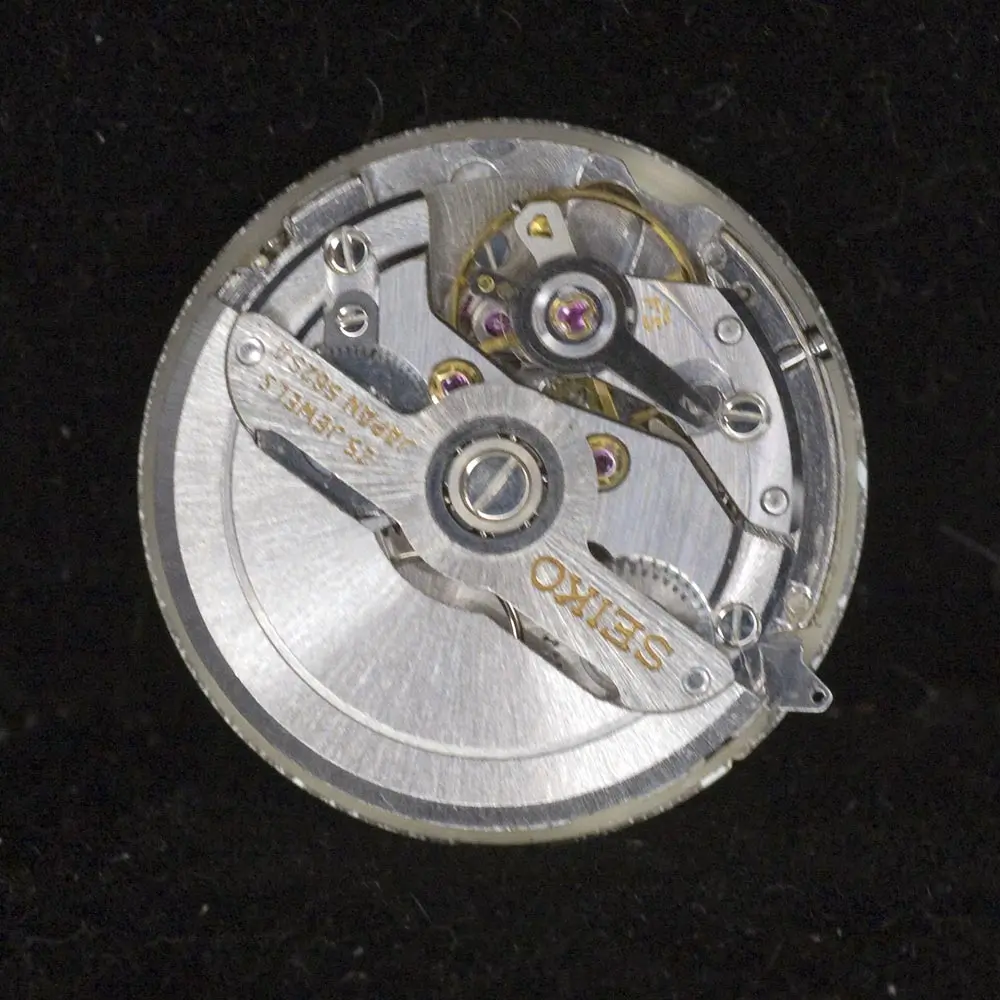
The KS 56xx-7000 is fitted with a Seiko 5625 movement, displaying the date only or with a 5626 movement, dsiplaying day and date.
The caliber is quite flat for an automatic one. The wheel train has been well optimised to take a lesser volume and it includes in the driving wheel the traditional friction triggered cannon pinion that is generally found on the upper part of the main plate.
On this early model, the date quickset transfer wheel is much mode robust than the plastic one from the latter models.
The movement is reliable and easy to service and maintain, parts are easy to find.
In conclusion
This KS 5625/6-7000 is according to me a must-have. It gathers everything that made the King so popular : a superb case, a efficient movement and a sober dial. When purchasing one, take a special attention to the dial, many of them have their rim in average condition, especially and mysteriously the 7020 dial (missing paint, stain…). The golden medallion can be quite worn or even missing. It is simply glued, the glue might have dried and fallen apart with years. Regarding the movement itself, the main issues are the faulty day/date quickset and a loose driving wheel (the movement runs, the second hands moves but the hour and minute hands are immobile).
| Brand | Seiko |
| Model | KS 5625/6-7000 |
| Year | 1968-1971 |
| Calibre | Seiko 5625 |
| Jewels | 25 |
| Rate | 28,800 bph |
| Case material | Stainless steel or gold plated |
| Width | 37.0 mm |
| Length | 41.8 mm |
| Lugs | 18 mm |
| Dial | White |
| Hands | Dauphine with black stripe or luminous broad batons |
Great info – where do you find all of this?
One question I do still have after reading your article – what crystal type does it have?
Well, it’s mostly information that I gather in buying, repairing, overhauling watches. Originally, the crystal was a flat, bevelled Hardlex, 30,0 mm in diametre. You can replace it by any 30 mm standard glass, mineral or sapphire. It’s glued on the inner bezel, which is held by the pressed outer bezel.